Alexander Jacobsen
Evolutionary Biologist and Naturalist
Doctoral Research
Background
Clunio marinus is a marine midge inhabiting rocky intertidal zones along the European Atlantic Coast, and is notable for timing its development and reproduction to the lunar cycle through an endogenous circalunar clock. Having the shortest known imago (i.e. reproductive stage) among insects, C. marinus individuals will emerge from the water, eclose, mate, and lay their eggs all in less than two hours during low tides on full or new moons, when tidal amplitudes are the most extreme. By timing their reproduction to the few hours during these low tides, adults are able to glue their egg clutches to suitable larval habitat (i.e. macroalgae turfs), which would normally be submerged (Neumann 1986). However, this reproductive timing comes with a catch: by synchronizing reproduction within a population, individuals emerging at different times become reproductively isolated, potentially leading to speciation. Indeed, in two locations in France (Plouguearneau and Roscoff) populations have diverged into several chronotypes (subpopulations with different emergence timing, Kaiser et al. 2021). My dissertation work focuses on answering the question "which mechanisms resulted in this divergence?"
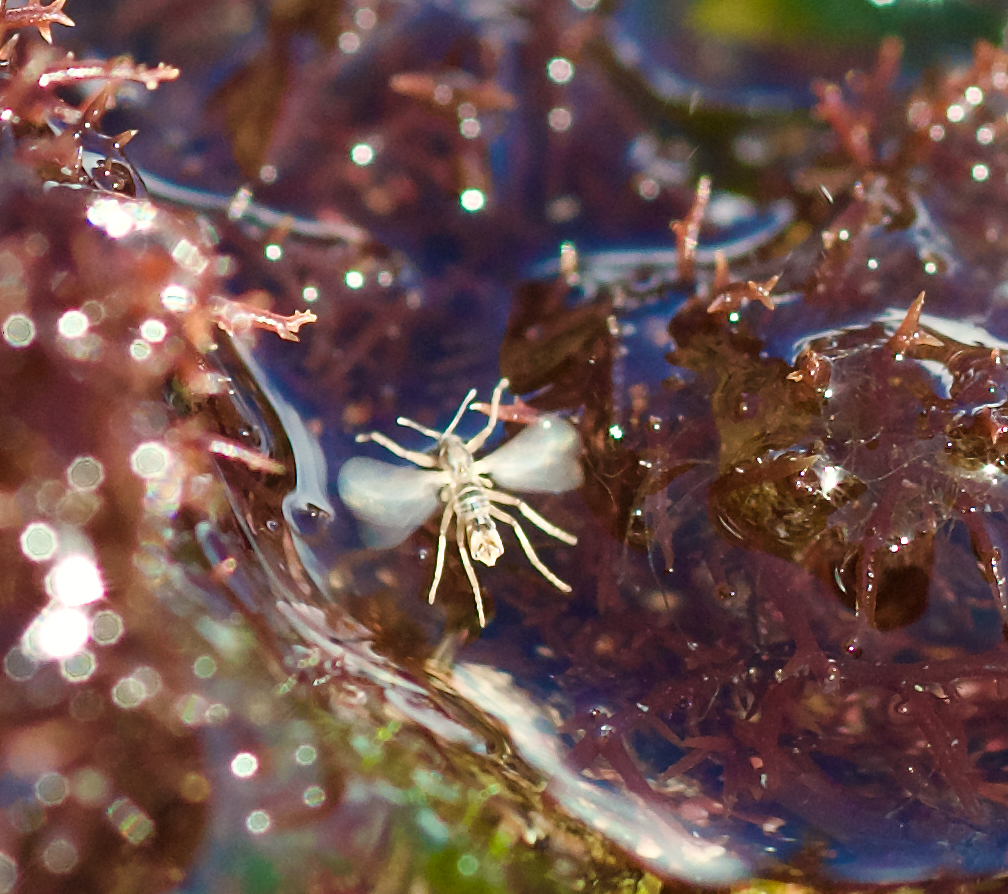
A male C. marinus scans the surface of the water looking for females. Poking up from the water are the patches of macroalgae in which the larvae live.

C. marinus larval habitat is exposed to the air during low tides. This tidal exposure gives mating adults the opportunity to lay eggs. However, due to their inability to fly, adults are restricted to laying their eggs at the water line during mating.
Spatial separation between chronotypes facilitates coexistence
Ekrem, R. K., Jacobsen, A., Kokko, H., Kaiser, T. S. (2025). How an Insect Converts Time Into Space: Temporal Niches Aid Coexistence via Modifying the Amount of Habitat Available for Reproduction. Ecology Letters.https://doi.org/10.1111/ele.70139
One major mystery in ecology is how similar organisms are able to co-exist with each other in the same environment. By sampling emerging C. marinus adults in the field in Roscoff, we found that the new moon (NM) chronotype has shifted its emergence with respect to the new moon spring tide, resulting in that chronotype emerging when low tides reach intermediate depths. This restricts egg laying to higher portions of the intertidal zone, creating spatial separation between chronotypes. We confirmed this by genotyping larvae over the bathymetric gradient, and through modeling, we verified that this spatial separation was enough to maintain coexistence.
Larval competition for space drives divergence
Jacobsen, A. G. G., Kaiser, T. S., Gokhale, C. S. (2025). How competition can drive allochronic divergence: A case study in the marine midge, Clunio marinus. https://doi.org/10.1101/2025.09.16.676472
Expanding on our previous modeling, we ask the question if the link between reproductive timing and egg laying depth not only facilitates coexistence, but also was the mechanism behind their divergence. To answer this, we constructed an individual-based model replicating the reproductive ecology of C. marinus and assumed that larval fitness is related to their position in the intertidal zone and the density of other larvae around them. We found that divergence occured across a broad range of parameter values, even when we modeled emergence timing with a realistic genetic basis, sexual reproduction/recombination, and a number of environmental fitness functions. We concluded that the link between emergence timing and larval depth provides a plausible mechanism for the divergence of chronotypes in sympatry.
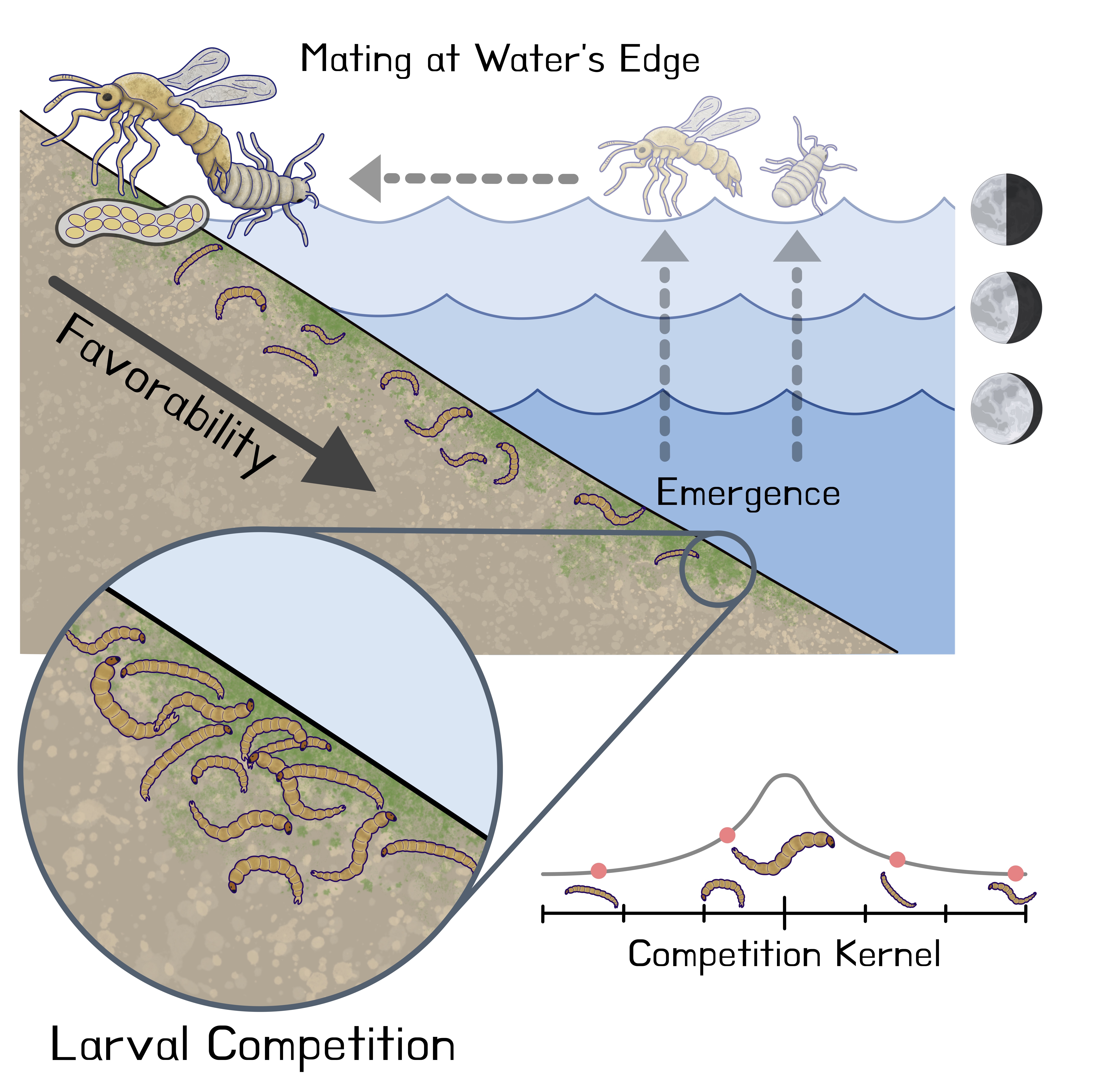
A schematic of our individual-based model, where larval competition for space results in a divergence in reproductive timing.
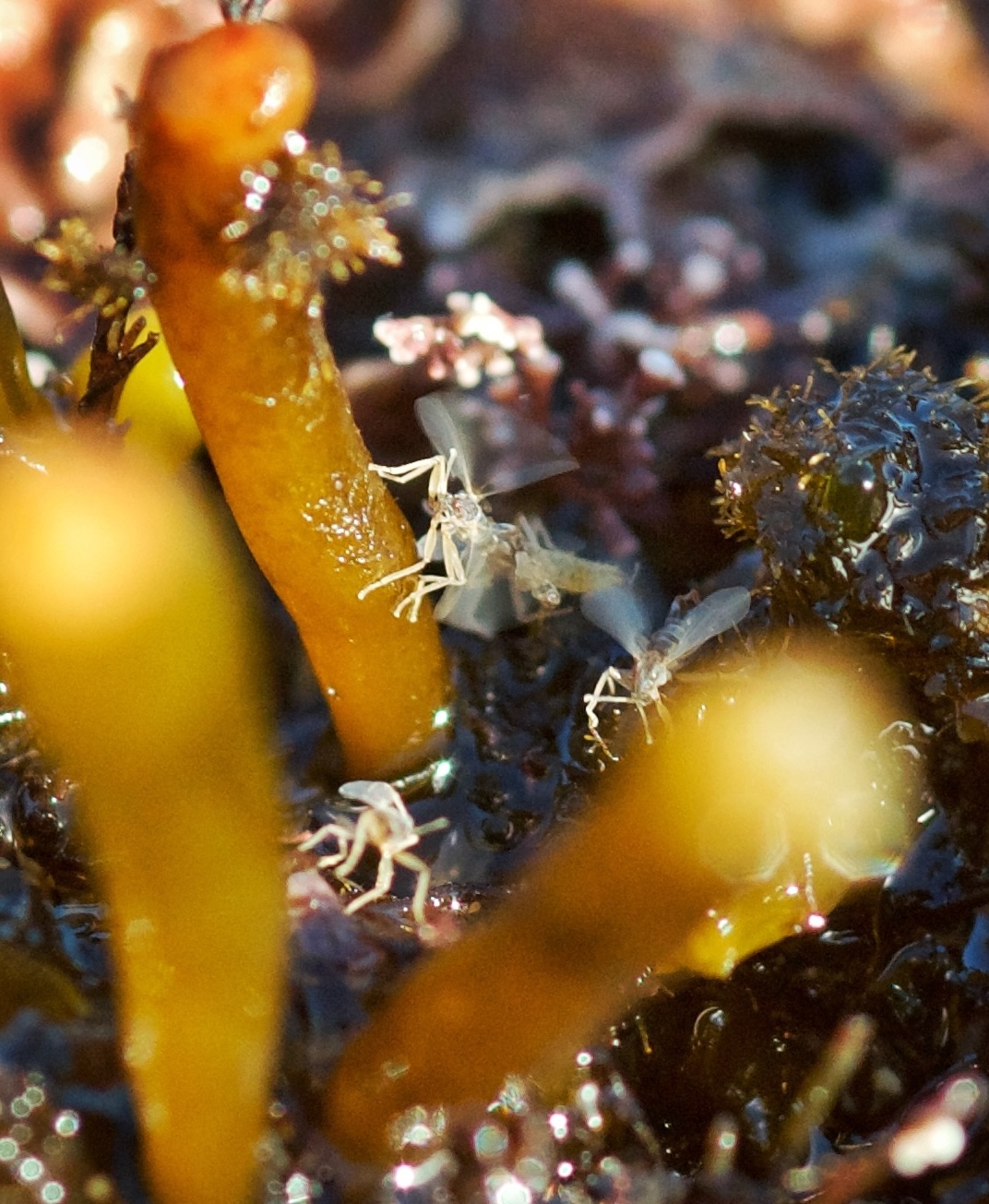
C. marinus adults mating on macroalgae in the intertidal zone of Plouguerneau in France
Reproductive timing is not the only barrier keeping chronotypes isolated
Jacobsen, A., Ekrem, R. K., Kaiser, T.S. (in preparation) Evaluating the role of a magic trait at the inception of speciation: Reproductive timing and the coupling of barrier effects in sympatric Clunio marinus chronotypes.
Though differences in reproductive timing would be expected to prevent gene flow between chronotypes, we still find a large degree of hybridization. To elucidate the barriers to reproduction acting between chronotypes, we first quantified the effectiveness of differences in timing as a barrier by measuring the rate of cross chronotype matings in the field. We found that while reproduction was isolated in time, individuals that were genetically one chronotype could still emerge during the other chronotype's peak. We therefore analyzed a number of reproductive phenotypes collected from both field-caught couples and controlled breeding experiments and found that chronotypes showed several other barriers to reproduction. Further, by inferring which loci are associated with these different barriers to reproduction, we find extensive pleiotropy (or tight linkage) between barrier traits, and also find increased linkage disequilibrium between distant barrier loci during the period between emergence peaks when hybridization is most likely. This suggests that loci across the genome are coupling together in response to selection against hybridization.
The genetic basis of differences in lunar and circadian timing
Jacobsen, A., Kaiser, T.S. (in preparation) Genome-wide association reveals genes involved in the circalunar clock of Clunio marinus.
The molecular basis behind the synchronized emergence timing of C. marinus has remained enigmatic. Here, we took advantage of the natural phenotypic diversity and extensive gene flow of the sympatric chronotypes in Roscoff to perform a genome-wide association study in order to map variation underlying differences in both daily and lunar timing. We found that much of the difference in daily timing was associated with a number of protein-modifying mutations in a single locus, which harbors a core circadian clock gene. For lunar timing, we found a number of associated genes, some of which also contained a number of protein-modifying mutations
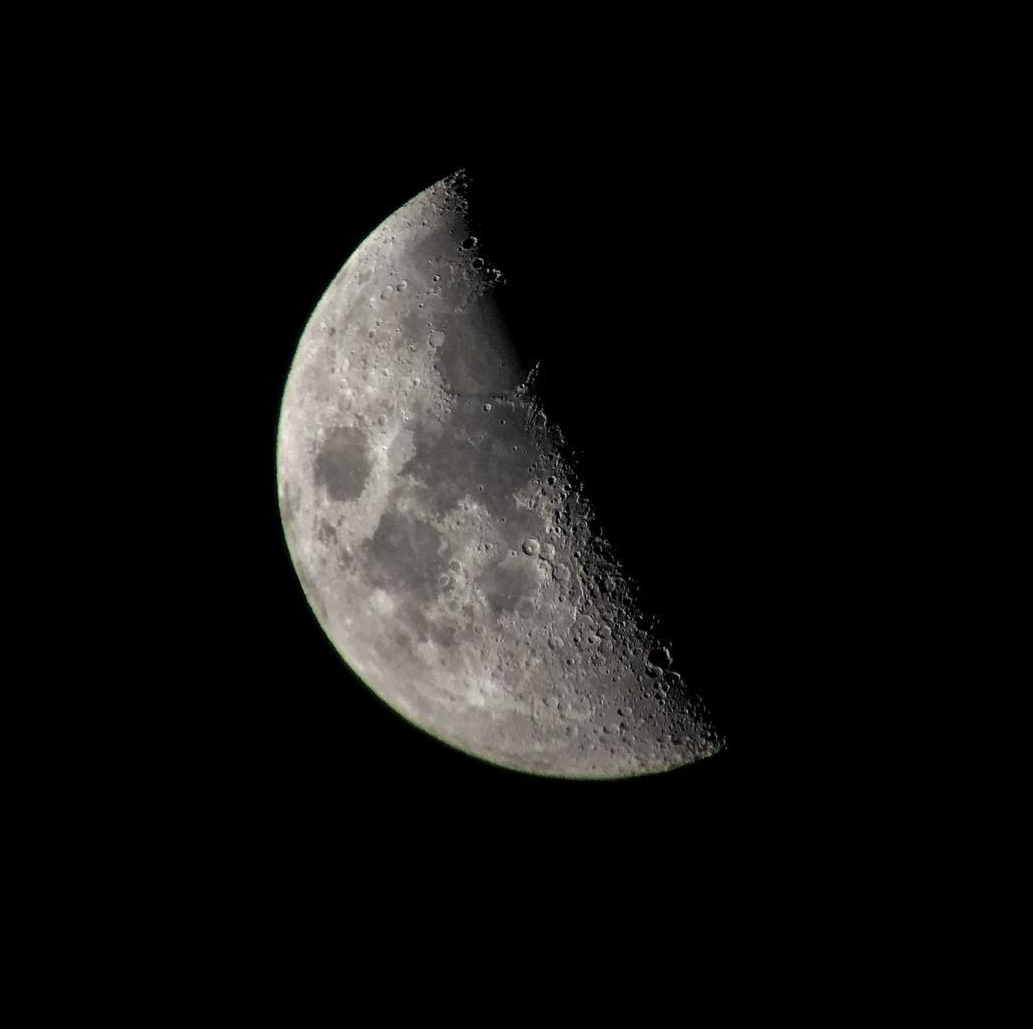
Moonlight is the main entrainment cue for the circalunar rhythms of the Roscoff chronotypes. Despite the fact that they receive the same cue at the same time, genetic differences result in emergence several days apart.

Rune Sommerkamp and I in the intertidal zone in Plouguernaeu, sampling larvae and recording the environmental variables that allow us to define the niches of sympatric chronotypes.
Ecological drivers of diversification
Jacobsen, A., Sommerkamp, R., Kaiser, T.S. (in preperation) Niche dimensionality in a micro-radiation of marine midge chronotypes
Previously, we had identified the link between emergence timing and depth to be a plausible mechanism for divergence between chronotypes, as predictions from modeling matched field observations in Roscoff. However, if this was truly the mechanism for divergence, then our predictions should match what we see in Plouguerneau as well, where we find three sympatric chronotypes instead of just two. While much of this work is still on-going, our preliminary results show that our mechanism matches the emergence timing/bathymetric distribution of two out of three chronotypes, while the third seems to defy expectations. We are currently working to explore how further ecological drivers such as preference for microhabitat and competition for food might have played a role in diversification, as well as visualizing the regions occupied by each chronotype in higher dimensional niche space.